
In today’s fast-paced and collaborative work environments, effective teamwork is crucial for success. We find that one of the greatest challenges teams face is understanding and leveraging the unique strengths and communication styles of their members. Skills Lab has been offering the DiSC personality assessment to clients for several years and have seen immediate and impactful results. The DiSC assessment has many advantages in the workplace. By categorizing individuals into four primary personality types—Dominance, Influence, Steadiness, and Conscientiousness—DiSC offers powerful insights into how people think, behave, and interact.
Whether you’re managing a team or working within one, understanding these behavioral styles can lead to more improved team communication, better conflict resolution, and ultimately, enhanced collaboration. Let’s explore how the DiSC personality assessment can enhance team dynamics.
1. Improved Communication
Tailored communication: Team members can better understand how to approach each other based on their DiSC profiles. For example, someone with a ‘D’ personality may prefer direct, concise communication, while an ‘S’ personality might prefer a more thoughtful and supportive tone.
Reducing miscommunication: Knowing the communication styles can prevent misunderstandings and conflicts, helping team members engage in more productive discussions.
2. Building Stronger Relationships
Promotes empathy: By understanding different DiSC profiles, team members can develop empathy for each other’s perspectives and approaches.
Conflict resolution: Teams are better equipped to navigate conflicts because they understand each other’s motivations and reactions. For example, a ‘D’ might come off as too forceful to an ‘S’, but with DiSC awareness, they can adjust their approach.
3. Enhancing Collaboration and Synergy
Leveraging strengths: Teams can assign roles based on strengths that align with each DiSC type. For instance, people with high ‘I’ traits might excel at motivating others, while those with ‘C’ traits can handle detailed analysis.
Complementary skills: DiSC helps team members see how their different styles can complement one another. A balance of dominance and steadiness, for instance, can help a team make quick decisions without sacrificing long-term stability.
4. Boosting Productivity
Efficiency: Knowing each other’s styles helps optimize workflows. For instance, a ‘D’ may focus on setting goals and pushing the team to achieve results, while an ‘S’ ensures smooth collaboration and support among team members.
Reduced friction: When everyone understands and respects one another’s working style, teams experience fewer disruptions and are able to focus on delivering results.
5. Personalized Development and Growth
Self-awareness: DiSC helps individuals understand their own behaviors and tendencies, giving them insight into how they contribute to a team. This self-awareness can improve personal development and strengthen teamwork.
Targeted feedback: Leaders can provide feedback based on a team member’s DiSC profile, offering insights that resonate with their unique personality type and enhancing development plans.
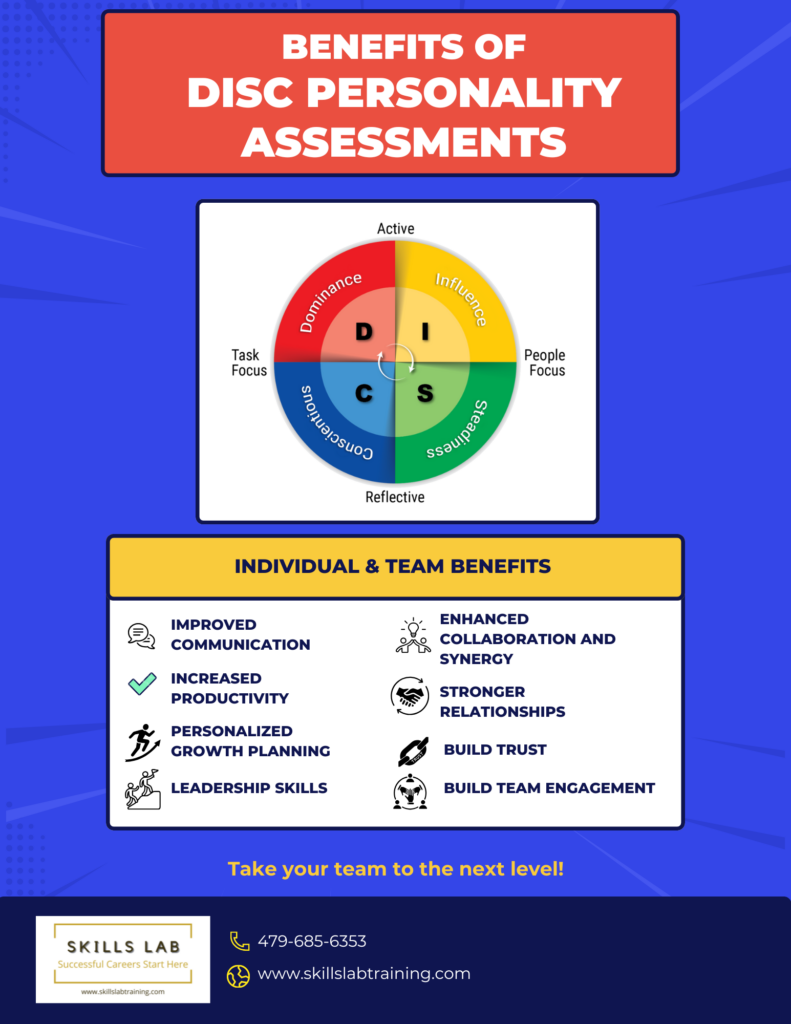
6. Building Trust
Encouraging openness: When a team adopts DiSC, it encourages openness in discussing personality traits, which leads to higher trust levels among members.
Stronger team bonds: Understanding and accepting each other’s differences cultivates an environment where people feel valued, which can strengthen overall trust in the team.
7. Team Cohesion and Engagement
Shared language: DiSC creates a shared vocabulary to describe behaviors, which makes it easier to discuss issues and potential solutions.
Motivated teams: When team members feel understood and respected for their unique contributions, their engagement and motivation to work collaboratively increase. DiSC assessments can build trust in teams.
8. DiSC Assessment for Leadership Development
Customizing leadership style: Leaders can adapt their approach based on the DiSC profiles of their team members. For example, a ‘D’ leader might adjust their directness to be more engaging for an ‘I’ type.
· Better decision-making: With a clear understanding of team members’ strengths and challenges, leaders can make decisions that benefit from a well-rounded perspective.
We absolutely believe in the power of DiSC, because we have seen the effect on our own clients. We encourage teams to explore the DiSC assessment as a tool for improving their own collaborative efforts. Schedule a consultation with one of our coaches to explore DiSC further.

