
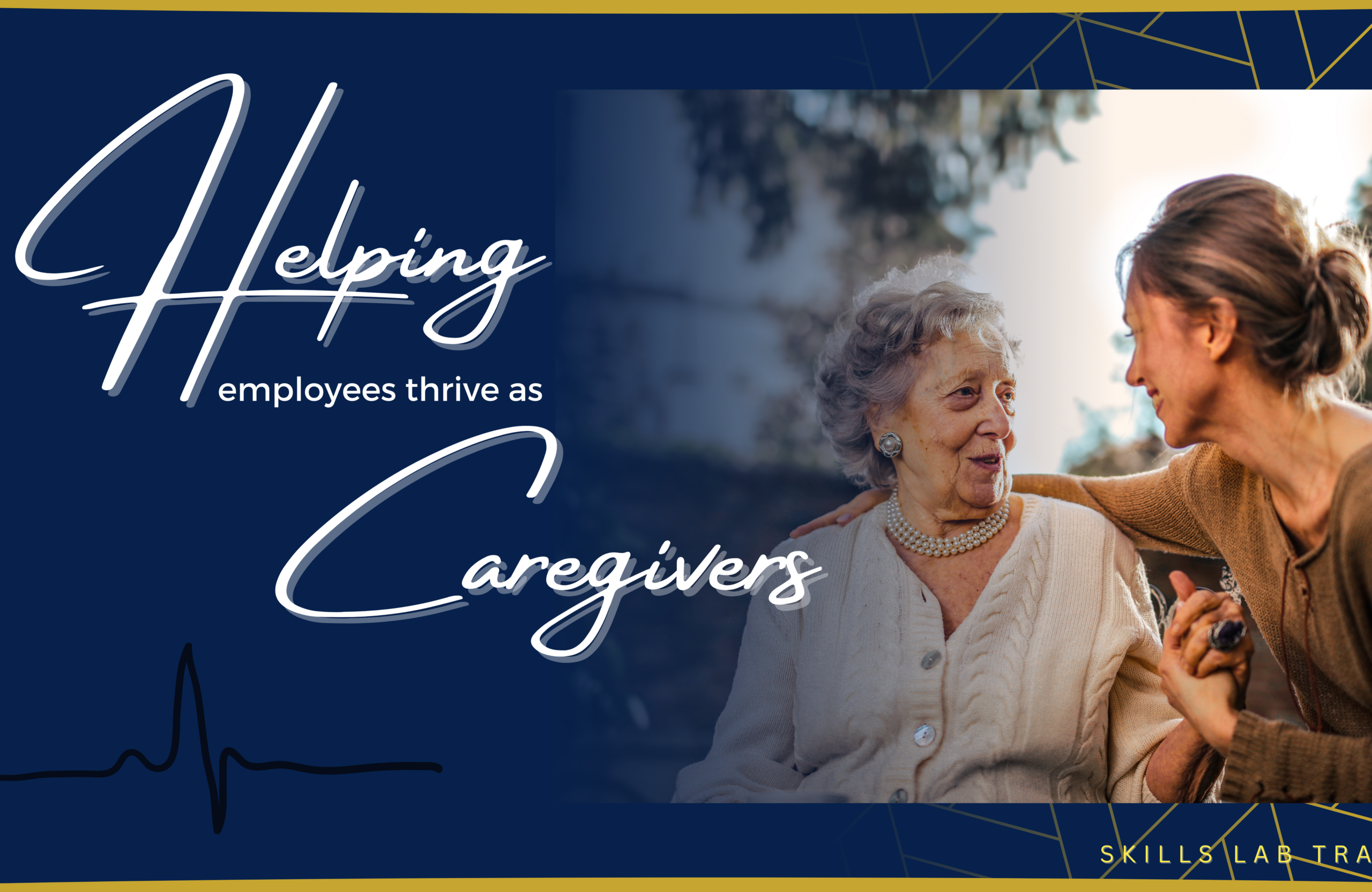
This past week, Skills Lab leaders attended the Arkansas SHRM (Society of Human Resource Management) conference – it was a great event with wonderful speakers. One session jumped out to us in particular; Quinn Grovey, former HR Leader at Walmart and Home Depot and current board member on the Broyles Foundation for Alzheimer’s Caregivers, conducted a session where he discussed his documentary film, Growing Up Grovey, about caring for his mother who had Alzheimer’s disease. He discussed the hardships that he experienced as a caregiver, and what this experience taught him about caring for employees in the workplace who are also in a caregiving role.
At Skills Lab Training, we work with organizations that put programs in place to hire and retain top talent, and it is evident from countless conversations with candidates that caregiver benefits in the workplace cannot be ignored.
A new crisis in the workforce:
According to a study by the Rosalind Carter Center, as much as 22% of the U.S. workforce is composed of family caregivers, and on average these people provide 20 hours of caregiving services each week — on top of their full-time jobs. Not surprisingly, nearly one-third of these employees will eventually leave work due to caregiving responsibilities. As HR professionals and employers, how can we support these workers and ensure their talents are retained?
As our workforce demographics shift, an increasing number of employees are taking on caregiving responsibilities for their Boomer-generation parents. This dynamic brings unique challenges, as employees strive to balance the demands of work with the often unpredictable needs of elder care. HR professionals and employers play a pivotal role in addressing these challenges by fostering supportive workplace environments for caregivers and adopting policies that accommodate their needs.
The Strain on Workers:
Caregivers face significant challenges, including emotional and physical strain, time management difficulties, and financial stress. Many employees in this situation experience a constant juggling act, as they coordinate medical appointments, provide daily assistance, and manage emergencies—all while maintaining their careers. This dual responsibility can affect their productivity, morale, and long-term career aspirations, with the risk of burnout or turnover if they lack support.
Supporting employees with caregiving responsibilities isn’t just a compassionate decision; it’s a strategic one. Employees who feel supported in their caregiving roles tend to demonstrate greater loyalty, productivity, and morale, leading to better retention rates and reduced recruitment costs for employers. A study conducted by Harvard Business School’s Project on Managing the Future of Work noted that roughly 30% of the caregivers said their employers’ support had prevented them from taking a leave of absence or leaving their job. In recognizing and addressing the needs of caregivers, companies can create a more inclusive and resilient workforce.
How to Support:
To effectively support employees caring for parents or family members with special needs, organizations should consider implementing policies like:
- Flexible schedules
- Remote work options
- Dedicated caregiver leave
- Access to resources such as mental health support, elder care guidance, or local caregiver resources.
By adopting these practices, companies can create a supportive culture that values employees’ personal lives while promoting productivity.
Now is the time for HR leaders and employers to review current policies and identify ways to better support employees caring for family members. Let our team help you create a more supportive workplace—contact us to review your policies and explore tailored programs to support caregiver employees.

