
After two decades in recruitment, we’ve witnessed countless layoffs and their aftermath. Nearly every professional we’ve interviewed has experienced a layoff at some point in their career. What many don’t discuss enough is the emotional journey and critical timing that follows this major career disruption.
In February 2025 about 1.8 million people were laid off in the United States. This is up from the same month in 2024. Average layoffs per year are around 20 million US workers.
The Emotional Reality
Layoffs trigger a genuine grieving process. Most people navigate through the five classic stages—denial, anger, bargaining, depression, and acceptance. This emotional journey varies widely; some move through these stages swiftly, while others need considerable time to process their new reality. Understanding this emotional landscape is crucial for effective recovery.
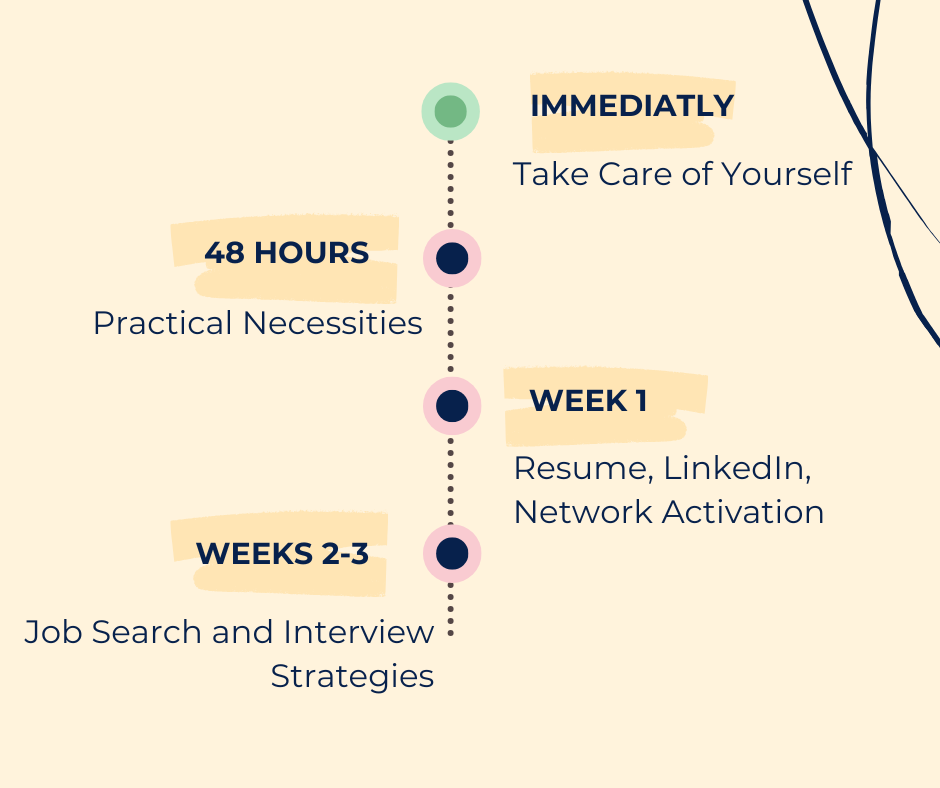
Immediately (and continually):
Prioritize Self-Care
This challenging transition demands attention to your well-being:
- Acknowledge your emotions without judgment
- Establish a structured daily routine that includes physical activity
- Avoid impulsive decisions made from emotional reactivity
- Connect with supportive individuals who can provide perspective
- Set boundaries around your job search to prevent burnout
Counterintuitively, many professionals delay their job search after a layoff. They become trapped in early grief stages—denial or anger—believing that avoiding reality might somehow resolve their situation. It won’t.
While it’s perfectly reasonable to take that already-planned vacation, spending months in a state of inertia can severely damage your prospects. Starting your search promptly gives you a competitive advantage before others with similar qualifications flood the market.
Strategic Actions for Post-Layoff Success
First 48 hours:
Address Practical Necessities
Before diving into your job search, secure your immediate needs:
- Carefully review your severance package and understand its terms
- Examine insurance continuation options (COBRA) to maintain coverage
- Utilize any outplacement services offered by your former employer
- File for unemployment benefits if you qualify
- Collect meaningful references from managers and colleagues while relationships remain fresh and top-of-mind
First Week:
Revitalize Your Resume
Your resume requires immediate attention:
- Verify your contact information’s accuracy—a surprisingly common oversight
- Adopt a clean, scannable format that emphasizes achievements through concise bullet points
- Maintain a comprehensive base resume, but customize it for specific opportunities
- Quantify your accomplishments whenever possible to demonstrate concrete value
Optimize Your LinkedIn Presence
For many recruiters, your LinkedIn profile serves as their first impression:
- Update to a current, professional photograph that conveys approachability and competence
- Align your profile content with your enhanced resume, creating digital consistency
- Strategically incorporate industry keywords that appear in your target job descriptions
- Craft a compelling headline and summary that clearly communicates your value proposition
Activate Your Network
Your professional connections represent perhaps your most valuable job-seeking resource:
- Thoughtfully announce your availability within your network
- Be specific about your target roles, industries, and organizations
- Approach networking conversations as exchanges rather than requests
- Reconnect with former colleagues who understand your work quality firsthand
Weeks 2-3 (or sooner):
Conduct Strategic Job Research
Beyond scanning job boards, develop a proactive approach:
- Create a targeted list of desirable companies, industries, and potential managers
- Consider suppliers, clients, and adjacent organizations from your previous role
- Connect with former employees of target companies to gain insider perspectives
- Set up alerts on relevant job boards to stay informed of new opportunities
- Establish relationships with specialized recruiters in your field
- Clarify what organizational culture, mission, and values matter most to you
- Assess your previous compensation to understand your market value and future expectations
Prepare and Practice
Before interviews begin, develop confidence through preparation:
- Craft a concise, poised explanation of your layoff situation
- Develop a compelling “elevator pitch” about your background and aspirations
- Anticipate common interview questions and practice articulate responses
- Prepare thoughtful questions that demonstrate your research and interest
Highlight Transferable Skills
Understand how your capabilities translate across roles and industries:
- Identify your core competencies and portable professional strengths
- Create concrete examples that demonstrate how these skills apply in different contexts
- Practice discussing your adaptability and capacity for rapid learning
- Show how your unique combination of skills creates distinctive value
Navigating a layoff represents one of professional life’s most challenging transitions. Skills Lab Training has created a free download with more tips for navigating a layoff.

